
Support for the nervous system — before and after surgery.
NESA complements neurosurgical care through non-invasive modulation of the autonomic nervous system, supporting recovery.
Do you recognise yourself?
Neuropathic pain and hyper-excitability
Like a stripped cable throwing sparks for no reason. In neuropathic pain the system stays hyper-excited, and poor nerve blood supply worsens the signal.
Self-assessment, not self-diagnosis — discuss with a professional.
Non-invasive modulation of the autonomic nervous system.
Recovery
Support for post-operative recovery without medication.
Pain
Reduced neuropathic pain through autonomic balance.
Sleep
Better sleep as the basis of neurological regeneration.
Download the NESA presentation.
Mechanism, indications, protocols and clinical data for implementing NESA.
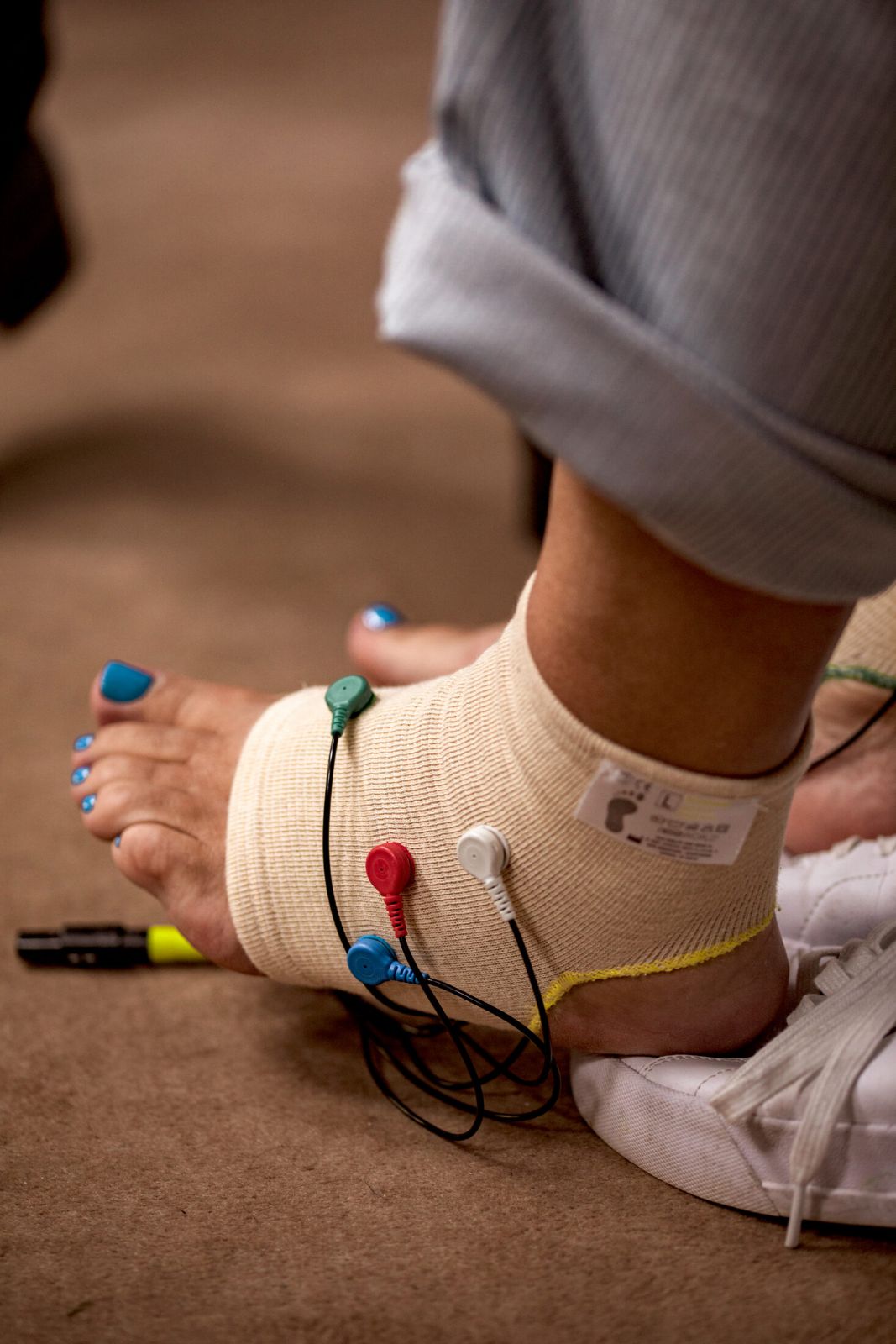
Microcurrents through the wrists and ankles — the whole autonomic axis at once.
Objective effects on stress and autonomic tone.
The figures below concern stress and autonomic regulation — the areas where NESA has published data. No specific neurosurgical outcome numbers exist, and none are cited here.
anxiety/obsession/hostility (20 sessions); +40% prefrontal alpha waves (EEG, 10 sessions) — Álvarez de los Heros, UAH 2019.
SDNN and vagal tone (RMSSD).
The figures reflect an effect on stress and HRV, not neurosurgical outcomes. NESA complements care and does not replace surgery; no promise of cure. Data from peer-reviewed studies; results vary individually.
Bring NESA into your practice.
At the core: programmes P1–P9
Every protocol in this field combines the reference programmes P1–P9 — general homeostasis, body levels, ANS/CNS and targeted nerves — according to the clinical goal.
See programmes P1–P9 →Protocols are guidelines, not prescriptions.
Parameters are guides; the therapist adapts them to the patient.
NESA is not suitable for every patient and promises no cure.
Absolute contraindications (pacemaker, pregnancy, active implants) follow the device IFU.
Before you invest — the independent assessment.
We map clinical goals, workflows, budget and reimbursement — then recommend the solution that meets the department’s needs, not the easiest to sell.